



STUDY IN EUROPE
Europe has long been a classic destination for study abroad students. From studying French in Paris to business in London, Europe is home to several of the world’s most popular (and best) study abroad countries. Europe also gets a reputation of being expensive. Though true that some nations, like Switzerland and Norway, aren’t exactly student-budget friendly, places like Germany, Malta, Spain, and Portugal are surprisingly cheap — not to mention all the student discounts offered throughout the EU and the UK! No matter what your major, budget, or study abroad goal is, you’re sure to find a program that suits you in diverse, little Europe. With over 40 countries in Europe, it can be hard to decide where to spend a semester, summer, J-term, or year learning overseas! Each country has something to offer whether its the cuisine, culture, stunning landscapes, or captivating languages. To help you with your research for the perfect European study abroad destination, here are a few of the most popular countries to consider:
- France
- England
- Ireland
- Spain
- Germany
- Italy

However, some of the more overlooked European study abroad destinations also happen to be a bit more affordable (and off the beaten path!). If you want to expand your options beyond the above, you could also consider:
- Sweden: which has affordable full-degree programs (though not a very affordable cost of living).
- Malta: whose one university (the University of Malta) conducts courses in English.
- The Netherlands: which also have a few English-language university options.
- Portugal: Spain’s overlooked, budget-friendly neighbor.
- Czech Republic: another budget-friendly option with a unique, non-Western culture.
WHY STUDY IN EUROPE?
Europe is the ideal destination for young students seeking to establish themselves abroad. It boasts of high quality universities in every discipline and a welcoming multi-cultural environment.
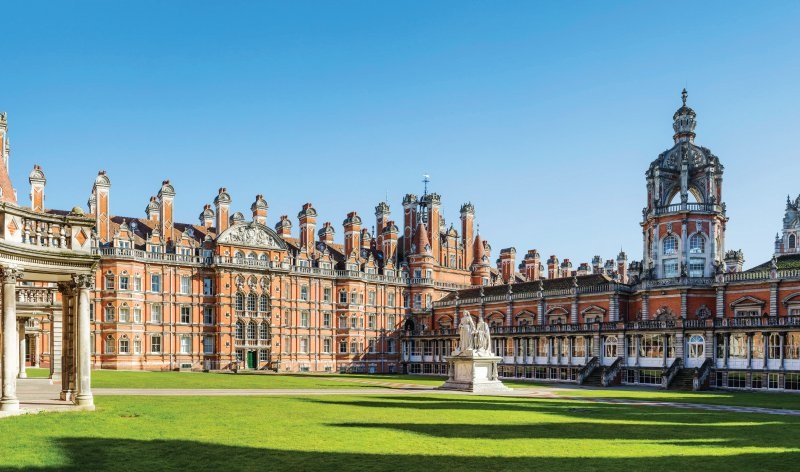
YOUR STEPPING STONE TO A EUROPEAN CAREER
European countries are a great option for students looking to study abroad. Not only do these countries have well established educational systems and some of the world’s leading universities, they also give students access to the European job market. With a plethora of countries to choose from and access to the single-market, Europe is ideal for students seeking knowledge and high career prospects. Visa Fortune helps students navigate the European education system and gain admission to prestigious universities.
WHY STUDY IN EUROPE?
Europe is the ideal destination for young students seeking to establish themselves abroad. It boasts of high quality universities in every discipline and a welcoming multi-cultural environment.
- Renowned universities
- Access to scholarships & free education (some countries)
- Opportunities in sciences, arts & business
- Multicultural environment
- Access to Europe
COST OF STUDYING IN EUROPE
The cost of studying in European universities depends on your course, country & university. In some countries it is possible to access subsidised or free education as well. Visa Fortune can advise you on your options based on your educational goals and financial resources.
| Study Program | Average Tuition Fees in EUR |
| Bachelor’s Degrees | 4,500 EUR/year for EU/EEA-students 8,600 EUR/year for students outside EU/EEA |
| Master’s Degree | 5,100 EUR/year for EU/EEA-students 10,170 EUR/year for students outside EU/EEA |
UPCOMING INTAKES IN EUROPE
Different countries in Europe have different intake periods based on their university cycles. Typically, the intake cycles are as follows.
Intake 1: Fall Intake – Starts in late August and ends in late December or early January
Intake 2: Spring Intake – Begins in January and ends in early May
EUROPE STUDENT VISA REQUIREMENTS:
- Visa application form for selected country
- Must meet age requirements of the country
- Valid passport
- Valid documentation from European university
- Documents and evidence of adequate finances for your expenses
- Flight tickets
- Meet language requirement if any
WORKING IN EUROPE WHILE STUDYING:
Certain countries in Europe allow students to work for a stipulated number of hours annually. However, this can be part-time work and not full-time.
WORKING IN EUROPE AFTER GRADUATION:
European countries offer various employment opportunities for graduates. Typically, graduates need to apply for temporary residence or a work-permit soon after graduating in order to stay on. Your Visa Fortune consultant can guide you on this process so you can plan your educational and professional journey in Europe better.
TOP UNIVERSITIES
| World University Rank 2019 |
University Name | World University Rank 2019 |
University Name |
| 1 | University of Oxford | 40 | Karolinska Institute |
| 2 | University of Cambridge | 41 | Paris Sciences et Lettres – PSL Research University Paris |
| 9 | Imperial College London | 44 | Technical University of Munich |
| 11 | ETH Zurich | 47 | Heidelberg University |
| 14 | UCL | 48 | KU Leuven |
| 26 | London School of Economics and Political Science | 57 | University of Manchester |
| 29 | University of Edinburgh | 58 | Delft University of Technology |
| 32 | LMU Munich | 59 | Wageningen University & Research |
| 35 | École Polytechnique Fédérale de Lausanne | 62 | University of Amsterdam |
| 38 | King’s College London | 67 | Humboldt University of Berlin |